Embroidery is not merely a matter of patterns, flowers, or decorative motifs – lettering is also an important part. From monograms and names to inspirational quotes, fonts bring words to life in fabric. But unlike digital graphics or printed text, not all fonts are good in embroidery. Hand stitching letters should be precise, readable, and fit on machines. That’s why it is very important to select the best fonts for embroidery, both for hobby and for professional use.
Here, we are going to look at the most popular types of embroidery fonts, what makes the font embroidery-friendly, and how to pick the most suitable one to use in the project.
The reason Why Font Choice Matters in Embroidery.
Embroidery machines are physical, unlike printed designs, where any font can be used. It is an indication that not all fonts are screen to stitch. Fonts that appear to appear fashionable on a computer screen will get distorted, crowded, or unreadable when stitched, particularly in small fonts. It is important that an appropriate embroidery font be chosen in regard to appearance and longevity.
Clarity & Readability
Embroidered lettering is most important in terms of legibility. The use of clean lines and balanced spaces of fonts gives the names, quotes, and initials a clear appearance even when stitched small, like in baby clothes or caps. Excessive ornamental fonts will lose their clarity and become disorganized.
Smooth Stitching
Embroidery digitized fonts contain the correct spacing between stitches, and the stitching flow is smooth, eliminating the possibility of thread breaks, puckering, or skips. Proper fonts would help in saving time and material on the stitching process, as it would be easier and quicker.
Durability
Embroidery fonts of high quality are also created to withstand frequent washing and wear. Embossed lines eliminate fraying, and a uniform density is used to make sure that the letters do not separate or wear out in the long run. This is necessary, most especially in clothes and accessories that are frequently used.
Professional Look
Appropriate font enhances the embroidery works, and this makes them look good and professional. It could be a big bold font to use on sports jerseys or a fine font to use on monograms; fonts that are meant to be embroidered are always consistent, stylish, and will satisfy the customer.
Characteristics of Good Embroidery Fonts
One of the most significant steps in making embroidery of high quality is the choice of font. Not every font is stitch-friendly, and prior to use, one needs to consider its design and functionality. The ideal embroidery fonts are those ones, which are clear, durable, and compatible with machines. The following are the important features to consider:
Simplicity
The safest fonts to embroider on are always clean and bold fonts. Unusually decorative or thin fonts can become lost in the stitching and particularly on a small scale. No decorative fonts, such as simple block, without serifs, or rounded fonts, make all letters legible and even in various materials.
Stitch Count
It is important that the density of stitches is balanced. Embroidery fonts may include too many stitches in a small area, which may lead to thread breakage, puckering of the fabric, or even breaking the embroidery machine. Conversely, fonts with very under-stitching can appear incomplete or weak. Good embroidery fonts are computerized to ensure that they do not strain the cloth.
Size Compatibility
There are fonts that are ideal in large writing, like jacket backs or bold monograms, and those that are digitized, especially in small details like hats, logos, or baby clothes. Embroidery fonts must be scalable and readable, and the design must be preserved without distortion.
Minimal Overlaps
The fonts that contain too many flourishes, strokes that overlap, or are too tight may be fine to print, but stitch badly. They are able to establish thread build-ups, unorganized overlaps, or irregular textures. The font types to use in embroidery machines are open spacing fonts and clean paths.
Digitization Quality
The best-designed font will not sew well unless it was digitized well. Embroidery fonts are designed to contain high quality, which is digitized to flow smoothly, with sharp edges and repeating results. It is always good to use professional digitized fonts instead of converting ordinary computer fonts.
Best Fonts for Embroidery
Here are the most popular and widely recommended fonts for embroidery projects:
Block Fonts (Sans Serif)
- Examples: Arial Block, Helvetica, Franklin Gothic
- Why it works: Simple, bold, and easy to read. Perfect for uniforms, sports gear, and bold names.
- Best use: Jackets, tote bags, and business logos.
Serif Fonts
- Examples: Times New Roman, Georgia, Roman Serif
- Why it works: Adds elegance while remaining readable. Works well for monograms and decorative projects.
- Best use: Pillows, wedding gifts, and upscale home decor.
Script Fonts (Cursive)
- Examples: Brush Script, Lucida Handwriting, Lobster
- Why it works: Flowing, elegant stitches for a personal touch.
- Best use: Baby clothes, bridal robes, and personalized gifts.
- Tip: Works best in medium-to-large sizes—small cursive often loses readability.
Monogram Fonts
- Examples: Circle Monogram, Vine Monogram, Diamond Monogram
- Why it works: Specifically designed for embroidery, these fonts maintain balance and symmetry.
- Best use: Towels, handkerchiefs, napkins, pillowcases.
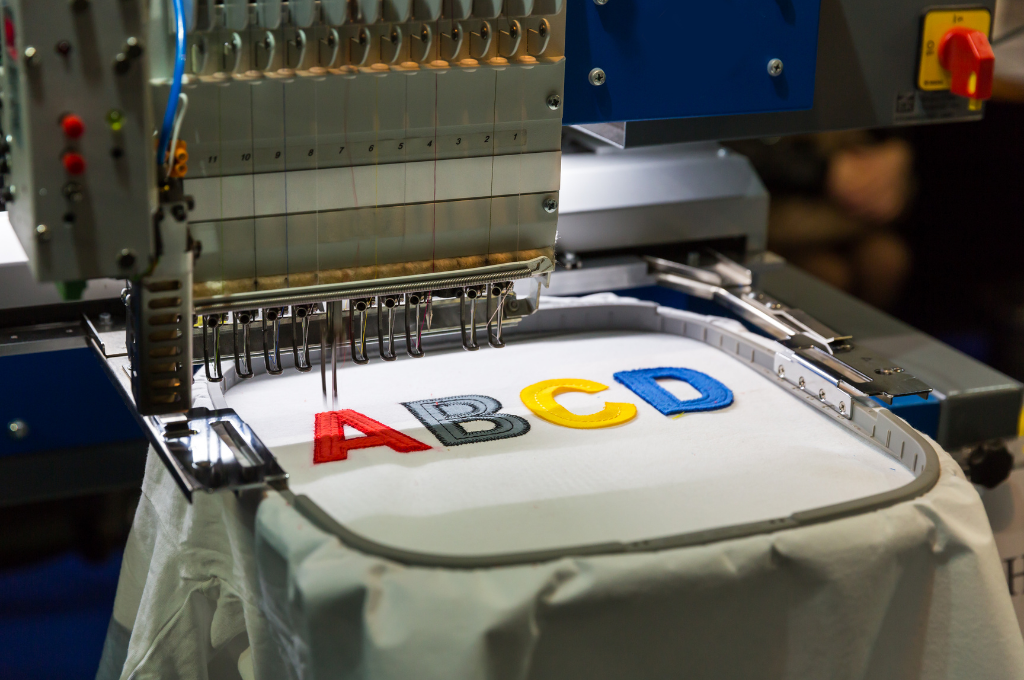
Appliqué Fonts
- Bold, chunky fonts digitized for fabric appliqué.
- Why it works: Large letters with appliqué add depth and texture.
- Best use: Baby blankets, kids’ t-shirts, banners.
Vintage Fonts
- Examples: Old English, Gothic, Retro styles
- Why it works: Brings a dramatic, old-fashioned aesthetic.
- Best use: Wall hangings, heritage projects, themed apparel.
Modern Minimalist Fonts
- Thin, clean lines with simple strokes.
- Why it works: Matches contemporary styles and stitches cleanly.
- Best use: Fashion items, tote bags, minimalist home decor.
Fonts to Avoid in Embroidery
- Ultra-thin fonts – Often too delicate and break easily.
- Highly decorative fonts – Excessive flourishes can cause tangled threads.
- Overlapping fonts – Multiple crossing stitches lead to messy results.
- Tiny script fonts – Letters may blur together and become unreadable.
Popular Embroidery Font Sizes
It is equally important to select the font size as well as the style. Various projects have varying sizes of lettering in order to be legible, comfortable, and pleasing to the eye. The most popular embroidery font sizes and their most appropriate applications are listed below:
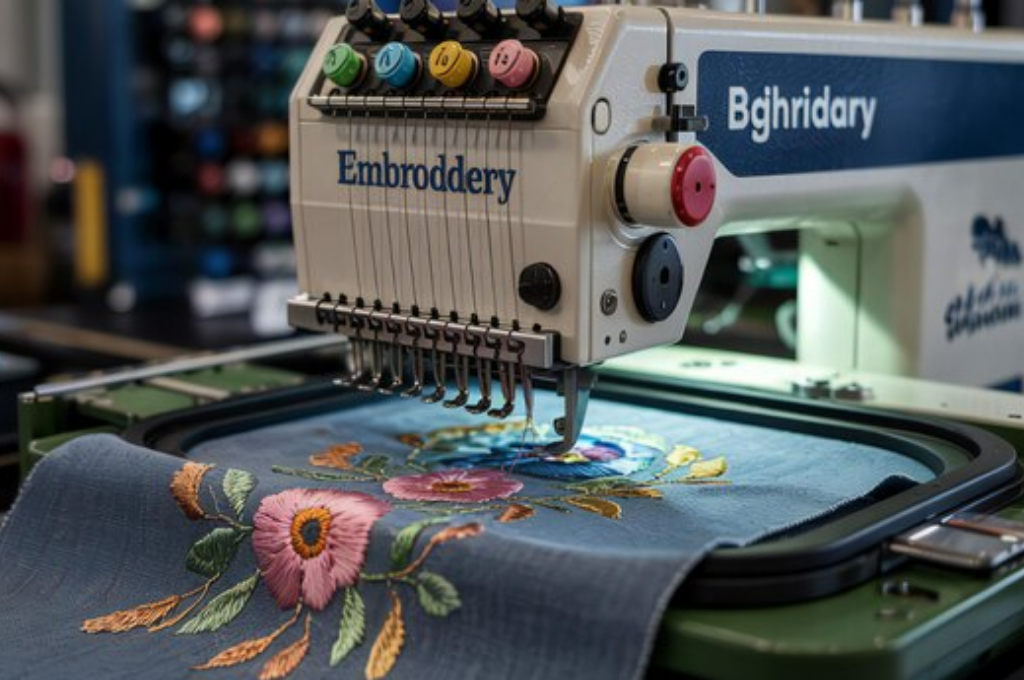
Small Fonts (¼ to ½ inch)
Initials or tiny labels are common fonts and small fonts used as personalization on garments. These are ideal in baby clothes, collars, cuffs, socks, and other minor objects such as handkerchiefs. Fonts are stitched perfectly in this size because space is limited, and fonts with clean lines and simple details are the best choice. Do not use too ornamental or writing styles; they can become difficult to read.
Medium Fonts (½ to 1 inch)
The most versatile fonts are medium-sized, which is why they are used to place the name, a short quote, or some meaningful words on a piece of clothing and home decor. It is a perfect fit on t-shirts, bibs, tote bags, and blankets. It has the right feel of readability and detail of the design with block and script font choices.
Large Fonts (1 to 4 inches)
Big fonts should be used with bold statement jewelry, applique designs, or banners, or as decorative wall hangings. They are usually applied in monograms of pillowcases, block quilts, and jackets. With this size, it will be possible to use more decorative fonts with curves or flourishes, as the added detail will still be seen and read.
Always test-stitch fonts at your desired size before finalizing.
Where to Find the Best Embroidery Fonts
- Embroidery Software – Programs like Wilcom, Hatch, and Embrilliance offer built-in and purchasable fonts.
- Online Marketplaces – Websites like EmbroideryLover.com, Etsy, and other embroidery stores sell font packs.
- Free Embroidery Fonts – Some digitizers offer free downloads; just make sure they include commercial-use licenses if you’re selling.
- Digitizing Services – Hire professionals to digitize your favorite font for embroidery use.
Tips for Using Fonts in Embroidery
Choosing the correct font is just one aspect of it; the utilization is what can affect the end result a lot. The following are some of the main tips that can assist you in coming up with clean, professional looking embroidery lettering:
Match Fabric & Font
Fabrics do not react to all fonts. Thicker fabrics, such as denim, canvas, or fleece, would be better in bold and block fonts due to their ability to maintain shape with heavy stitching. The light and fragile fonts should be used in soft materials like cotton, jersey, or linen, so that the design does not become cumbersome and load the other material.
Use a Proper Stabilizer
Embroidery lettering must have a stabilizer. In its absence, fabrics can stretch, pucker, or warp, resulting in uneven stitches. Select a stabilizer that suits your cloth- tear-away with a stable material, cut-away with a stretchy one, and water-soluble with delicate baby clothes or sheer material.
Test Before Final Use
It is always advisable to carry out a test run on the scrap fabric before you transfer the design to the actual garment. This assists you in assessing clearness, scale, arrangement, and the density of threads. Testing eliminates expensive errors and makes sure that the font picked appears as well-stitched as on a computer.
Thread Colors
The thread choice is important in font readability. Those with high contrast (navy on white, gold on black) will be easier to read, whereas low contrast colors will lead to the letters fading into the material. To create a decorative effect, the use of metallic or variegated threads must be done very sparingly to ensure that readability is not impaired.
Spacing & Kerning
In embroidery, it is important that there be proper letter spacing (kerning). Close letters can overlap and leave a messy pile of stitches, whereas spacing them too far apart will cause the words to appear detached. Kern to make the text look clean and balanced, depending on the type of fabric and the font type used.
Frequently Asked Questions
Here are commonly asked questions about the best fonts for embroidery:
Can I use any computer font for embroidery?
Not directly. Fonts must be digitized into embroidery machine formats before use.
Which embroidery font is best for beginners?
Block fonts are the easiest to stitch and most reliable for beginners.
What file formats are embroidery fonts available in?
Most are provided in PES, DST, JEF, VP3, HUS, and EXP formats.
Are embroidery fonts free to use commercially?
Only if they come with a commercial-use license, always check the terms before selling products.
Conclusion
Embroidery uses fonts to make words real and provide a personal and stylish touch to clothes, houses, and gift decorations. The fonts that are best at embroidery are the ones that stitch easily, can be read at various sizes, and are the type of font that fits the project. The font you use can be the difference between your embroidery, whether it is bold block letters or nice scripts and monogram styles.
Personalizing baby clothes, wedding favors, or branding uniforms, it is always a good idea to use fonts that can be embroidered to accomplish a professional look. Your lettering will be as refined and classic as your designs with good digitizing, stabilizing, and testing.