The world of embroidery has evolved far beyond home hobbyists and small crafts. Today, industrial embroidery machines power some of the largest apparel, fashion, and promotional businesses worldwide. These machines combine high-speed performance, precision stitching, and automation to handle bulk orders efficiently while maintaining top-tier quality.
If you’re planning to upgrade from a home embroidery setup or start an embroidery production business, understanding how industrial embroidery machines work and how to choose the right one is essential. This guide covers everything you need to know, from key features and types to pricing, maintenance, and business potential.
What Are Industrial Embroidery Machines?
An industrial embroidery machine is a heavy-duty, multi-needle, and high-speed machine designed for professional embroidery production. Unlike home or single-needle machines, these models can stitch thousands of designs per day, handle thicker fabrics, and operate continuously for hours without overheating.
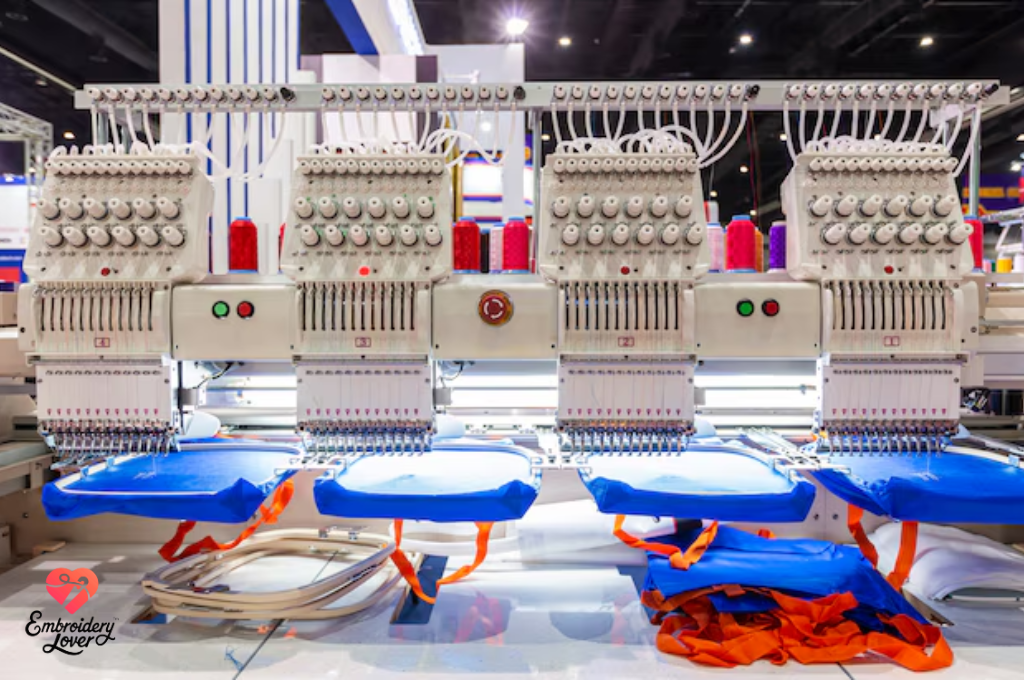
They’re built for efficiency, accuracy, and durability, making them indispensable for:
- Custom apparel manufacturers
- Promotional product companies
- Fashion brands
- Corporate uniform suppliers
- Embroidery service providers
Key Features of Industrial Embroidery Machines
Industrial embroidery machines stand out due to their advanced engineering and automated capabilities. Let’s explore the key features that make them the backbone of commercial embroidery.
Multi-Needle Functionality
Most industrial machines feature 6 to 15 needles (or more), allowing multiple thread colors to be loaded simultaneously. This eliminates the need for manual color changes and speeds up production, especially for detailed designs.
High-Speed Stitching
Industrial models can achieve speeds of 1,000 to 1,500 stitches per minute or more. Despite the speed, they maintain exceptional precision, ensuring clean lines and consistent stitching—even on complex patterns.
Multi-Head Operation
Larger models feature multiple heads ranging from 1 to 30+ heads each, capable of stitching the same design simultaneously. This makes it possible to produce dozens of identical items at once, ideal for bulk orders.
Automatic Thread Trimming & Color Change
Automation is a key advantage of industrial embroidery machines. Built-in thread trimmers and automatic color-change systems save time, reduce manual intervention, and minimize thread waste.
Large Embroidery Area
Industrial machines typically offer a larger hoop size (up to 20x14 inches or more), making them suitable for embroidery on jackets, uniforms, tote bags, and large home décor items.
Touchscreen Controls & Software Integration
Modern industrial machines come with smart touchscreens and integrate seamlessly with embroidery digitizing software. You can easily import designs (in DST, PES, EXP, or other formats) via USB or network connection.
Types of Industrial Embroidery Machines
There are several types of industrial embroidery machines, each suited to specific business needs.
Single-Head Industrial Embroidery Machine
- Ideal for small to medium businesses or startups.
- Offers industrial-grade quality but operates with one embroidery head.
- Perfect for custom orders, prototypes, or small batches.
Example brands: Brother PR1055X, Tajima TMBR series, Melco EMT16X.
Multi-Head Industrial Embroidery Machine
- Best for large-scale production.
- Machines with multiple heads (6, 12, 15, or more) can embroider multiple garments at once.
- Significantly increases productivity and consistency in mass production.
Example brands: Tajima TMAR series, Barudan BEXS series, Happy Japan HCR3.
Flatbed Industrial Embroidery Machine
- Used primarily for large flat materials like curtains, quilts, or tablecloths.
- Ideal for continuous embroidery on fabric rolls.
Cylinder Arm Industrial Machine
- Designed for tubular or round items such as caps, sleeves, and bags.
- Provides flexibility for 3D embroidery and hard-to-hoop items.
Top Brands of Industrial Embroidery Machines
When investing in industrial-grade equipment, choosing a trusted brand ensures durability, advanced features, and strong customer support.
Tajima
Tajima is the world leader in industrial embroidery. Known for precision engineering, Tajima machines are reliable, fast, and capable of handling large volumes with minimal downtime.
Barudan
Barudan machines are built for extreme accuracy and longevity. They’re popular in professional embroidery factories and deliver consistent stitch quality at high speeds.
Brother
Brother’s PR and BP series bridges the gap between home and industrial use. These machines offer user-friendly interfaces while maintaining professional-grade performance.
Melco
Melco stands out for modular systems and cloud-based management, allowing businesses to scale easily by adding new heads as needed.
Ricoma
Ricoma offers cost-effective, beginner-friendly industrial machines that are ideal for startups and small embroidery businesses.
Advantages of Industrial Embroidery Machines
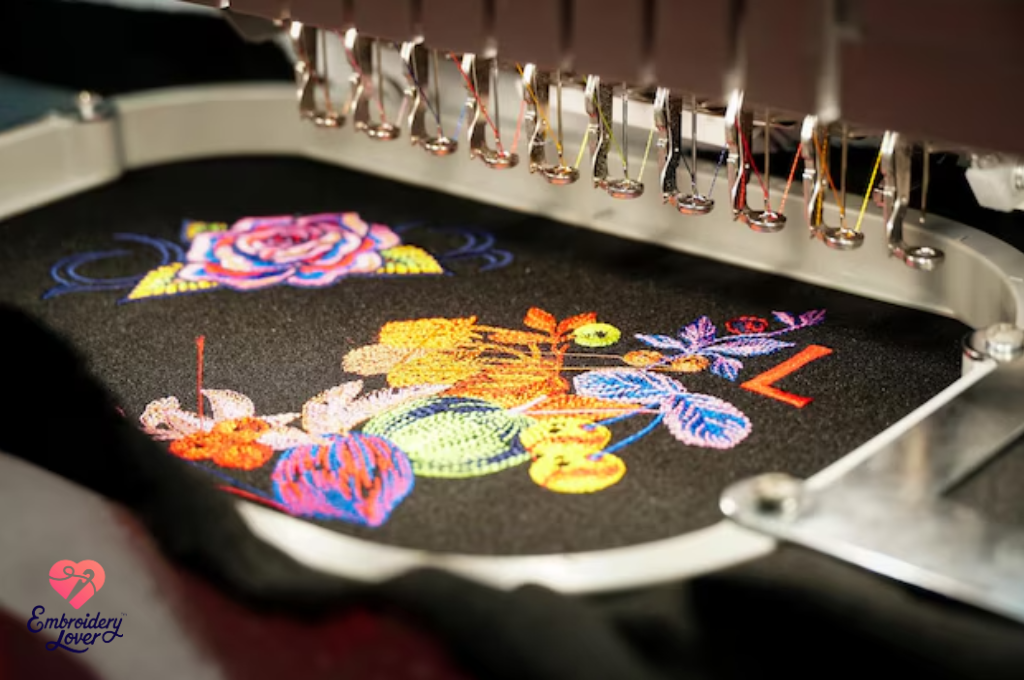
Investing in industrial embroidery machines offers countless benefits for both small and large-scale embroidery businesses. These machines are built to deliver precision, speed, and long-term reliability, making them essential for professional embroidery production. Let’s explore their major advantages in detail.
Increased Production Speed
Time is money in the embroidery industry, and speed is where industrial machines truly shine. With multiple needles and multi-head configurations, these machines can produce dozens or even hundreds of embroidered items simultaneously. A 6-head industrial embroidery machine, for example, can stitch six identical designs at once, cutting production time by up to 80% compared to single-needle home models.
High stitching speeds of 1,000 to 1,500 stitches per minute allow manufacturers to meet tight deadlines while maintaining consistent quality. This speed advantage is especially valuable for businesses handling corporate orders, sports uniforms, or mass-produced fashion items.
Consistent Stitch Quality
Consistency defines professionalism. Industrial embroidery machines use precision-calibrated motors and computerized controls to ensure every design is stitched with identical quality, even across large batches. This means a company logo embroidered on 200 shirts will look exactly the same on each one.
Advanced features such as automatic thread tension adjustment, real-time error detection, and digital precision controls help maintain perfect stitch density, alignment, and smoothness, no matter how complex the design. This level of reliability helps brands maintain their professional image and product standards.
Versatility Across Materials
Unlike smaller home embroidery machines, industrial models are built to handle a wide range of materials and applications. Whether you’re working with soft cotton baby apparel or thick leather jackets, industrial embroidery machines can adapt easily.
Key examples include:
- Cotton and Linen – Perfect for uniforms, shirts, and towels.
- Denim and Canvas – Common in bags, jeans, and workwear.
- Fleece and Polyester – Popular in sportswear and promotional items.
- Leather and Vinyl – Ideal for luxury goods and accessories.
The machine’s robust needle power and advanced presser foot systems make it possible to embroider on both delicate and heavy fabrics without distortion or skipped stitches.
Long-Term Durability
Industrial embroidery machines are engineered for endurance. Constructed with reinforced metal frames, heavy-duty motors, and industrial-grade components, these machines are built to handle continuous operation for years.
Many professional embroidery shops run their machines 10–12 hours a day, six days a week. With proper maintenance like regular cleaning, oiling, and calibration, industrial machines can last a decade or more. This longevity ensures an excellent return on investment, especially for growing businesses.
Automation and Efficiency
Automation is the heart of modern industrial embroidery. These machines come with intelligent systems that reduce human involvement and boost productivity.
Some of the key automation features include:
- Automatic thread trimming after color changes.
- Built-in color-change sequencing, allowing smooth multi-color embroidery.
- Memory functions that store frequently used designs for quick re-use.
- Error sensors that detect thread breaks, fabric shifts, or tension issues instantly.
These features minimize downtime, reduce operator fatigue, and eliminate repetitive manual tasks. As a result, businesses can focus more on design creativity and customer service rather than manual adjustments.
Scalability for Business Growth
Another major advantage of industrial embroidery machines is scalability. When your business grows, you don’t need to replace your machine; you can simply add more heads or units. Modular systems (like those from Melco or Ricoma) allow you to connect additional heads to handle larger orders without starting from scratch.
This flexibility ensures that small embroidery startups can grow seamlessly into full-scale production operations without a massive reinvestment.
Superior Design Flexibility
Industrial machines are compatible with professional digitizing software and accept multiple file formats such as PES, DST, EXP, and JEF. This means you can work on complex projects—from logos and monograms to 3D puff embroidery without compatibility issues.
Advanced touchscreen panels and built-in editing tools allow on-machine design adjustments, such as resizing, rotation, and repositioning, saving time and effort during production.
Cost Efficiency in the Long Run
While industrial embroidery machines have a higher upfront cost, they offer significant long-term savings. Their speed and reliability reduce labor costs, material waste, and downtime. Automated features minimize operator errors, meaning fewer reworks and wasted garments. Over time, the machine pays for itself through increased productivity and reduced manual overhead.
Industrial vs. Home Embroidery Machines
| Feature | Industrial Machines | Home Machines |
| Needles | 6–15+ | 1–2 |
| Speed | 1,000–1,500+ SPM | 400–800 SPM |
| Embroidery Area | Large (12–20+ in) | Small (4x4–8x12 in) |
| Output | High-volume | Low to moderate |
| Durability | Built for continuous operation | Limited runtime |
| Price Range | $8,000–$50,000+ | $500–$5,000 |
| Best For | Businesses, mass production | Hobbyists, small crafts |
Industrial machines are clearly designed for performance, scalability, and reliability, making them a must-have for any embroidery business looking to expand.
How to Choose the Right Industrial Embroidery Machine
Choosing the right industrial embroidery machine is one of the most important decisions for any embroidery business. The right equipment can boost productivity, reduce errors, and improve the overall quality of your work, while the wrong choice can lead to delays, maintenance issues, and financial loss.
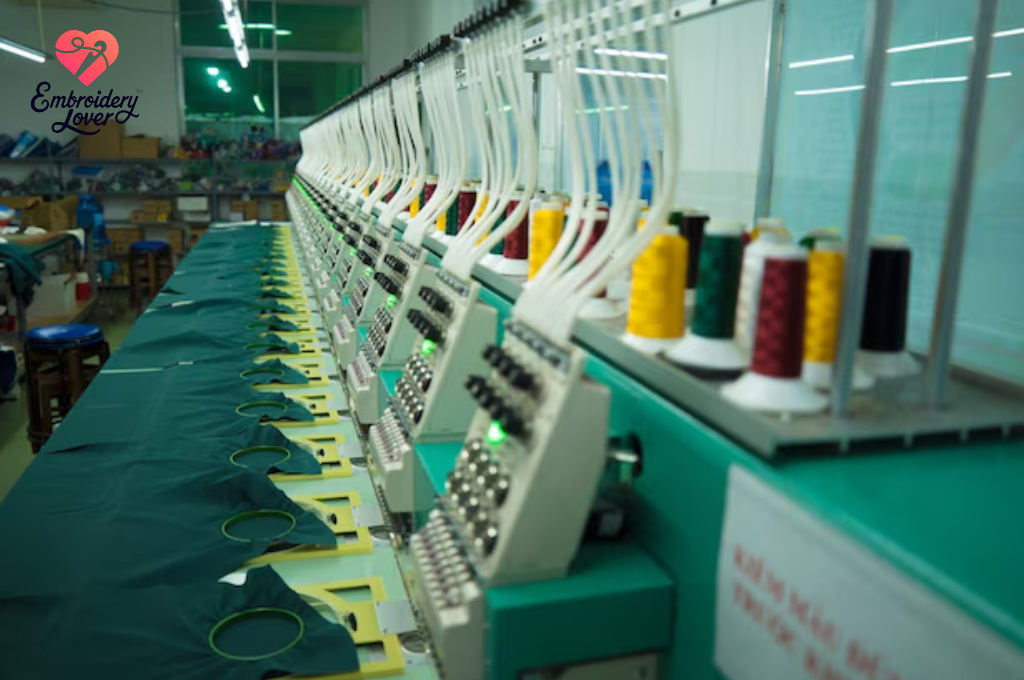
Below are the key factors you should evaluate before making your investment.
Production Volume
Your production volume determines t